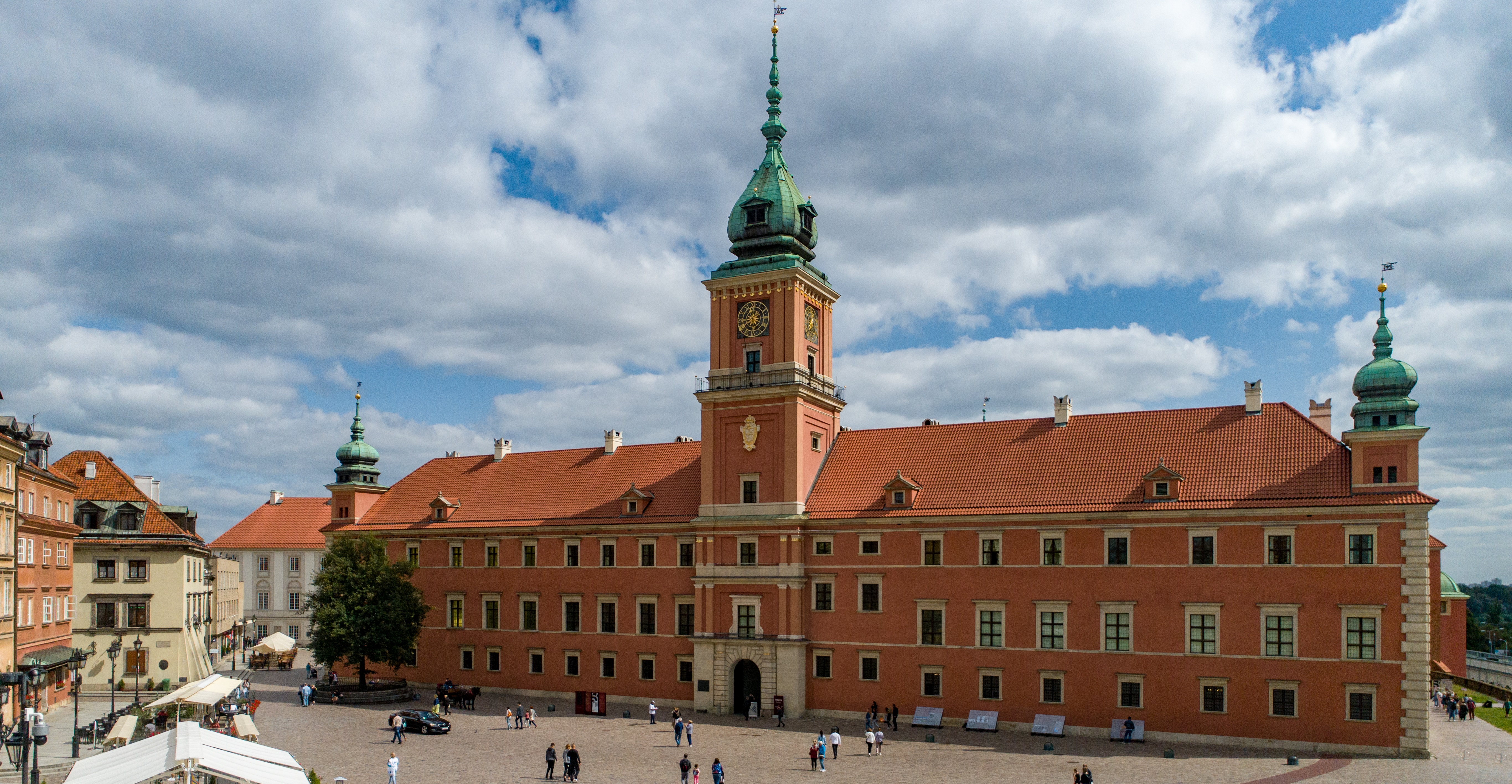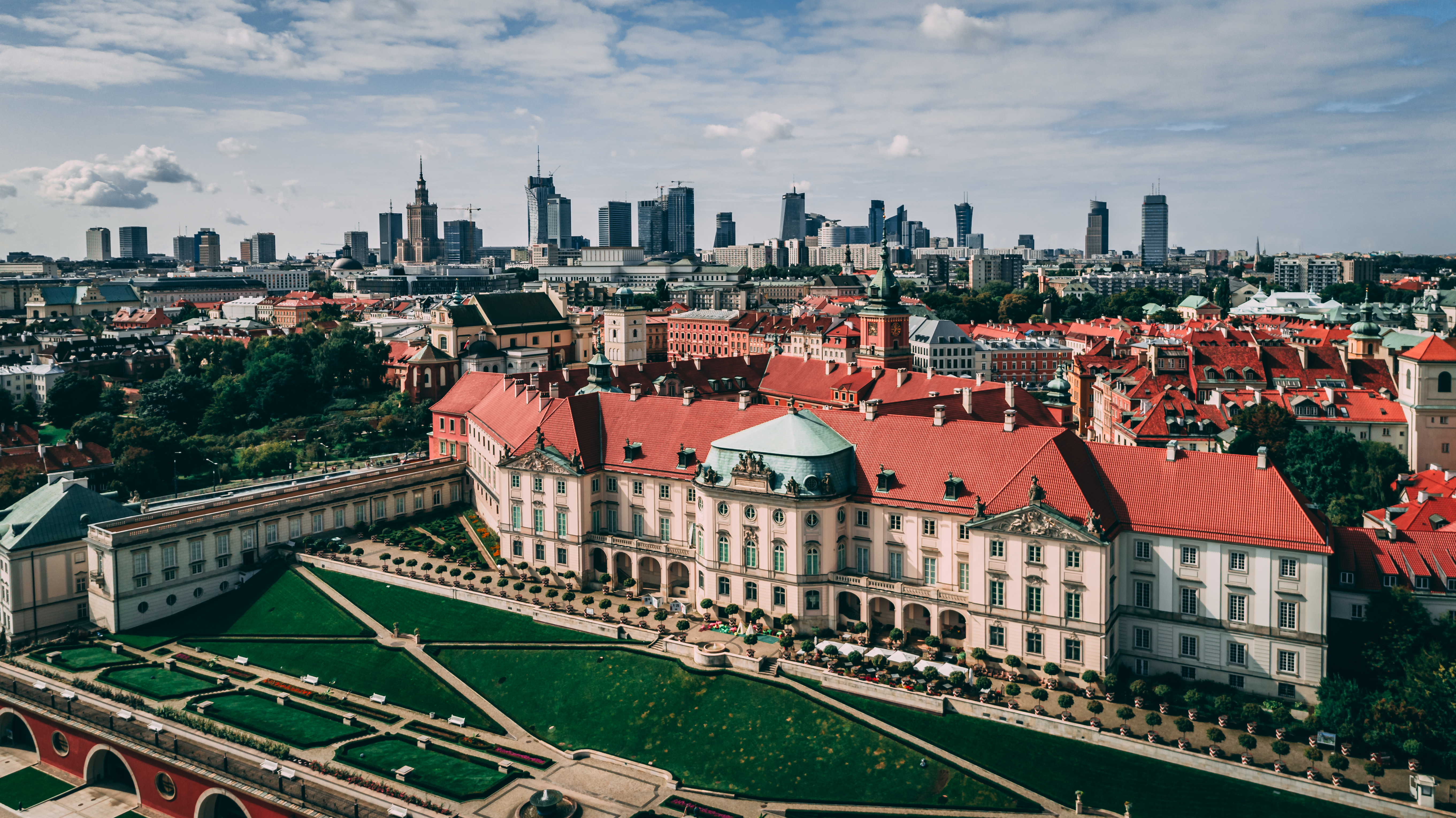
The Royal Castle in Warsaw in 2026: A Dialogue Between History and the Present
A rich season of temporary exhibitions, the inauguration of new permanent displays, and the further development of educational programmes — in 2026, the Royal Castle in Warsaw invites visitors to engage in a dialogue between history and the present. The programme encompasses both artistic projects and extensive scholarly and publishing activities.
Exhibitions: From Contemporary Art to Grand Historical Narratives
The 2026 exhibition season opened with Łukasz Stokłosa. The Shining, a contemporary art exhibition presented from 16 January in the Matejko Rooms and selected rooms of the Royal Apartments. The work of one of Poland’s most compelling contemporary painters enters into a direct dialogue with the nineteenth-century historical paintings of Jan Matejko, creating a multidimensional narrative.
One of the key projects of the spring season will be The Last Castle. Polish Castle-ness: From Wawel to Stobnica — an exploration of the castle as a symbol of power, prestige, and the national imagination, spanning historic royal residences and the most recent architectural projects. The Tin-Roofed Palace (27 March – 28 June) will present photographs by Nicolas Grospierre, Marta Ejsmont, and Mateusz Pawlukiewicz, among others, alongside architectural drawings, models, archival materials, and infographics. The centrepiece of the exhibition will be The Last Castle, an installation created by the artistic and curatorial collective Turnus and Mariia Kolomiitseva in collaboration with invited artists: Zuzanna Bartoszek, Wiktoria Kieniksman, Ant Łakomsk, Kuba Stępień, and Paweł Donhöffner Zięba.
The opening of The Great Game: The Opera of Władysław IV is scheduled for 17 April. The exhibition, which will run until 19 July, will present the history of the first opera stage in Poland, which functioned at the Royal Castle in the seventeenth century, as well as the figure of Władysław IV Vasa. The exhibition will remind visitors that during his reign, the Castle was not only a seat of power but also an important centre of artistic life. Although few original objects from that period have survived, the musical and scenographic atmosphere of the court opera theatre will be recreated.
In October, we are planning another event that will show the Castle from a less familiar perspective. We will invite visitors to an exhibition on the reconstruction and restoration of the Royal Castle in Warsaw. During the exhibition, we will share stories that are known only to the staff. We will reveal the part of the Castle that was originally designed during the reconstruction as guest rooms for the Council of Ministers – essentially a hotel for the most important state guests, complete with an elegant lobby, corridors, lifts, apartments with marble bathrooms, and dressing rooms with fine wood panelling. All of this has been preserved to this day, and these interiors now house offices.
New Permanent Exhibitions and Tour Routes
May will see the eagerly awaited opening of new permanent exhibitions. The Royal Clockmakers’ Room will showcase the Castle’s collection of tile and carriage clocks, curated by Katarzyna Krakowiak-Bałka. The objects selected by the artist and curator Konrad Nawrocki will be displayed in the very space where the court clockmakers once lived and worked – beneath the Clock Tower. This exhibition heralds a larger permanent display planned for 2027 in the Tin-Roofed Palace, where various collections of the Castle – including glass, porcelain, furniture, and fabrics – will be presented through the interpretation of contemporary artists.
In May, we also plan to open the renovated Prince Józef Poniatowski Apartment in the Tin-Roofed Palace, featuring an exhibition entitled Life After Life in the last room, dedicated to the birth of the prince’s legacy.
On the second floor of the Castle, visitors will be invited to explore the renovated Stefan Żeromski Apartment. Symbolically recreated based on the memories of the writer’s daughter, Monika Żeromska, the interior will serve not only as a museum space but also as a venue for meetings and discussions about literature.
The same month will also see the launch of new tour routes, allowing visitors to discover lesser-known corners of the residence and the stories connected with them.
The “Key in the Castle” Series
The 2026 programme features the “Key in the Castle” series, conceived as meetings with Polish artists within the exhibition space. Each event centres on a dialogue between a selected work of contemporary art and the museum’s collection, revealing unexpected connections, inspirations, and borrowings from past eras. The series appeals to both lovers of contemporary and historical art, reflecting the idea that the key to understanding “today” is “yesterday”. The first presentation in this year’s edition will take place in March and will feature Anna Barlik in a session entitled Organisation Strategies.
Open Castle: Education and Outdoor Events
The 2026 programme will include events aimed at the general public. In June, another picnic in the Castle Gardens will take place, an event that has attracted both Warsaw residents and tourists for years.
The art competitions for primary school pupils, organised by the Castle’s Education Department, are also very popular. This year’s fifth edition will be held under the slogan “Curtain Up”. For years, these competitions have fostered young participants' creativity and encouraged them to engage imaginatively with cultural heritage.
Starting this year, the Castle is a partner in the artistic project “Shakespeare Under the Stars”, which is set to become a permanent feature of Warsaw’s summer cultural landscape. In July, the outdoor stage in the Royal Castle Gardens will host the premiere of William Shakespeare’s A Midsummer Night’s Dream, directed by Jakub Krofta, with dramaturgy by Maria Wojtyszko and live music by Daniel Malchar. Performances will run from 11 July to 19 August, Tuesday to Saturday, once a day.
Scientific Activity – Substantive Background
The Castle is an important centre for research into history and culture. In 2026, academic sessions and conferences are planned, focusing on Zygmunt Batowski, the president of the Second Polish Republic, the history of Mazovia, and a new series of lectures offered both in person and online.
Publishing Activities – Arx Regia
The dynamic Castle publishing house, Arx Regia, has announced that in 2026 it will publish, among other works, Prof. Andrzej Rottermund’s book Rzymski początek. Canaletto w Warszawie (1766–1772) (Roman Beginnings: Canaletto in Warsaw (1766–1772)). New volumes in the “Katalogi Zbiorów” (“Collection Catalogues”) series will include Mapy i globusy. Katalog zbiorów Zamku Królewskiego w Warszawie (Maps and Globes: Catalogue of the Collections of the Royal Castle in Warsaw) by Tomasz Jakubowski and Teatr wojny ze Szwecją. Druki Pufendorfa i ryciny z jego wydawnictwa w kolekcji dr. Tomasza Niewodniczańskiego (The Theatre of War with Sweden: Pufendorf’s Prints and Engravings from His Publication in the Collection of Dr Tomasz Niewodniczański) by Kacper Łażewski.
Books accompanying temporary exhibitions will also hold an important place in the publishing programme. These include Wielka gra. Opera Władysława IV (The Great Game: The Opera of Władysław IV), edited by Dr Jacek Żukowski, and a publication accompanying the exhibition of works from the Ciechanowiecki Foundation collection, edited by Dr Magdalena Białonowska. In 2026, another volume in the popular “Zobacz to!” (“See it!”) series, devoted to the Knights’ Hall, will be released, alongside new volumes in the “Studia i Materiały” (“Studies and Materials”) series.
The 2026 programme at the Royal Castle combines exhibitions of ancient and contemporary art, the opening of new permanent displays, and an expanded educational and scientific offering. From the dialogue between Łukasz Stokłosa’s paintings and the tradition of Jan Matejko, through reflections on the castle as a symbol of culture, to the reconstruction of the court opera ambitions of Władysław IV Vasa, the institution is building a coherent narrative on the continuity and reinterpretation of heritage. The programme is further enriched by new exhibition spaces, outdoor events, educational projects, scientific conferences, and extensive publishing activities. The Castle continues to develop as a place where the past meets the present — open, substantive, and contemporary.